Technical Advantages, Materials, and Applications
In demanding sealing applications, performance is often limited by one factor: dimensional stability over time. When a profile is exposed to sustained compression, thermal swings, and repeated movement cycles, even small changes in geometry can reduce contact pressure, compromise fit-up, and accelerate wear.
Thread Insert technology addresses that risk by integrating a continuous fiberglass strand directly into the profile during extrusion, creating reinforcement that is literally built into the cord.
What is Thread Insert Technology?
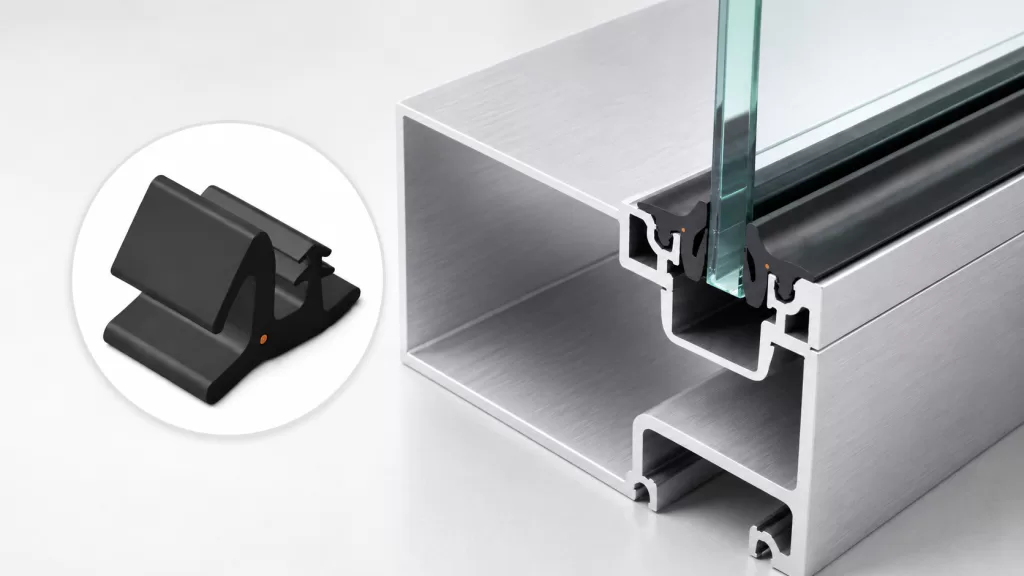
A fiberglass thread insert is produced through a specialized extrusion/co-extrusion process where a continuous fiberglass strand is embedded inside a solid EPDM or VMQ (silicone) profile during manufacturing.
The result is a reinforced cord designed to:
- Hold its geometry under compression
- Perform through temperature extremes
- Resist repeated expansion and contraction cycles
- Maintain function under continuous stress and movement
Why reinforcement matters
In real operating conditions, seals are rarely static. They experience:
- Continuous compression loads
- Thermal cycling (daily and seasonal)
- Dynamic movement and vibration
- Long service-life exposure to weathering or elevated temperatures
Without reinforcement, many profiles gradually lose dimensional stability, leading to misalignment, reduced compression, and long-term performance loss.
Thread Insert reinforcement helps stabilize the profile so sealing behavior remains consistent throughout its service life.
Key Technical Advantages
1) Dimensional Stability
The fiberglass strand helps the profile retain its intended geometry, reducing unwanted shrink/expansion behavior and improving repeatability in fit-up.
2) Mechanical Strength
Internal reinforcement increases resistance to deformation under load and supports more stable behavior in demanding duty cycles.
3) Performance Through Thermal Cycling
Thread Insert cords are engineered to maintain their form through repeated temperature changes, minimizing dimensional drift over time.
4) Long-Term Reliability
Stability inside the profile supports long-term sealing consistency, especially in applications where access for repair is limited or failure carries high cost.
Materials Used
EPDM (Solid)
A strong option for many outdoor and industrial environments due to its durability and common use in long-life sealing profiles. Thread Insert reinforcement adds stability when thermal cycling and sustained compression are major factors.
VMQ / Silicone (Solid)
A preferred option for applications requiring performance across broader temperature ranges. Adding Thread Insert reinforcement supports geometry control when seals must remain consistent through thermal extremes.
Where Thread Insert Cords Are Used
Thread Insert profiles are applied across industries where stability and repeatable sealing behavior are critical:
Glazing Systems (Architectural)
When sealing consistency depends on stable geometry and predictable compression behavior—especially under long-term movement and temperature variation.
Construction & Infrastructure
Used in insulation profiles, expansion joints, and sealing elements where long-term compression stability supports durability.
Automotive / Mobility
Helpful in systems exposed to mechanical demand, repeated movement cycles, and temperature variation.
Aerospace / Extreme Conditions
Applied where dimensional stability under temperature and pressure extremes is essential for reliable sealing function.
When to Specify Thread Insert
Thread Insert is typically a strong fit when your application involves:
- Sustained compression loads
- Frequent thermal cycling
- Movement or vibration
- High consequences of leakage or misalignment
- Long service-life requirements
In these cases, reinforcement helps ensure performance isn’t dependent on material selection alone, it’s supported structurally from within the profile.
When performance is critical, stability can’t be left to chance.
Thread Insert reinforcement is engineered into the cord, helping sealing profiles stay consistent, predictable, and reliable under real operating conditions.
If you’re evaluating dimensional stability requirements for an EPDM or VMQ sealing application, a technical review can help determine whether Thread Insert is the right fit for your platform.